Booster Juice Energy Booster (2026): Ingredients & Guide
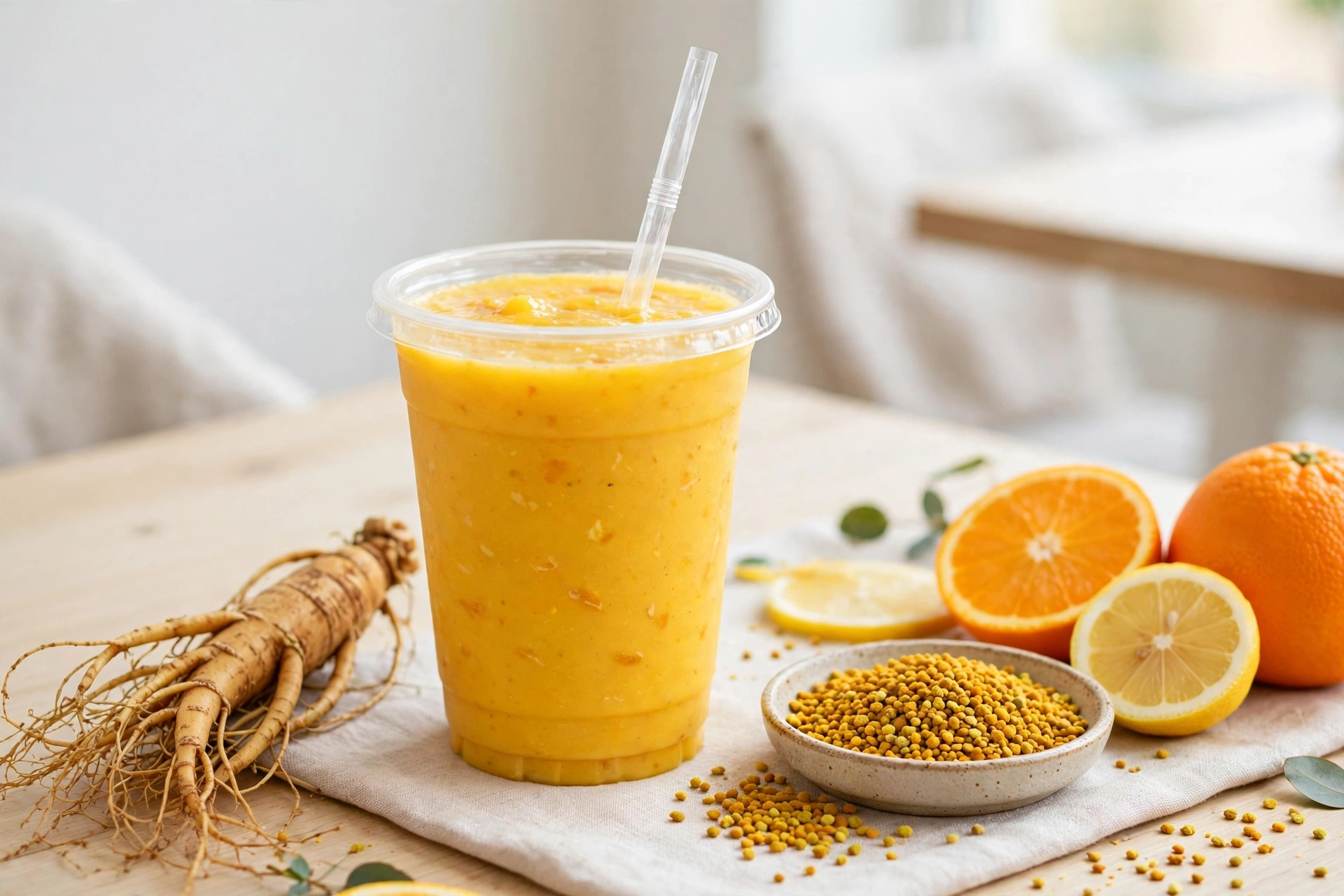
Short answer first: the Energy Booster is a smoothie add-on built around two ingredients — Korean ginseng and bee pollen. It is meant to give you a natural energy lift without relying on caffeine, and it is the booster people pick when their goal is gym performance or getting through a long day.
It is not a drink by itself. Like every booster on the menu, it is a small add-on mixed into your smoothie — see the full list of boosters on our Boosters page.
What’s inside the Energy Booster
Two ingredients, as described on the menu:
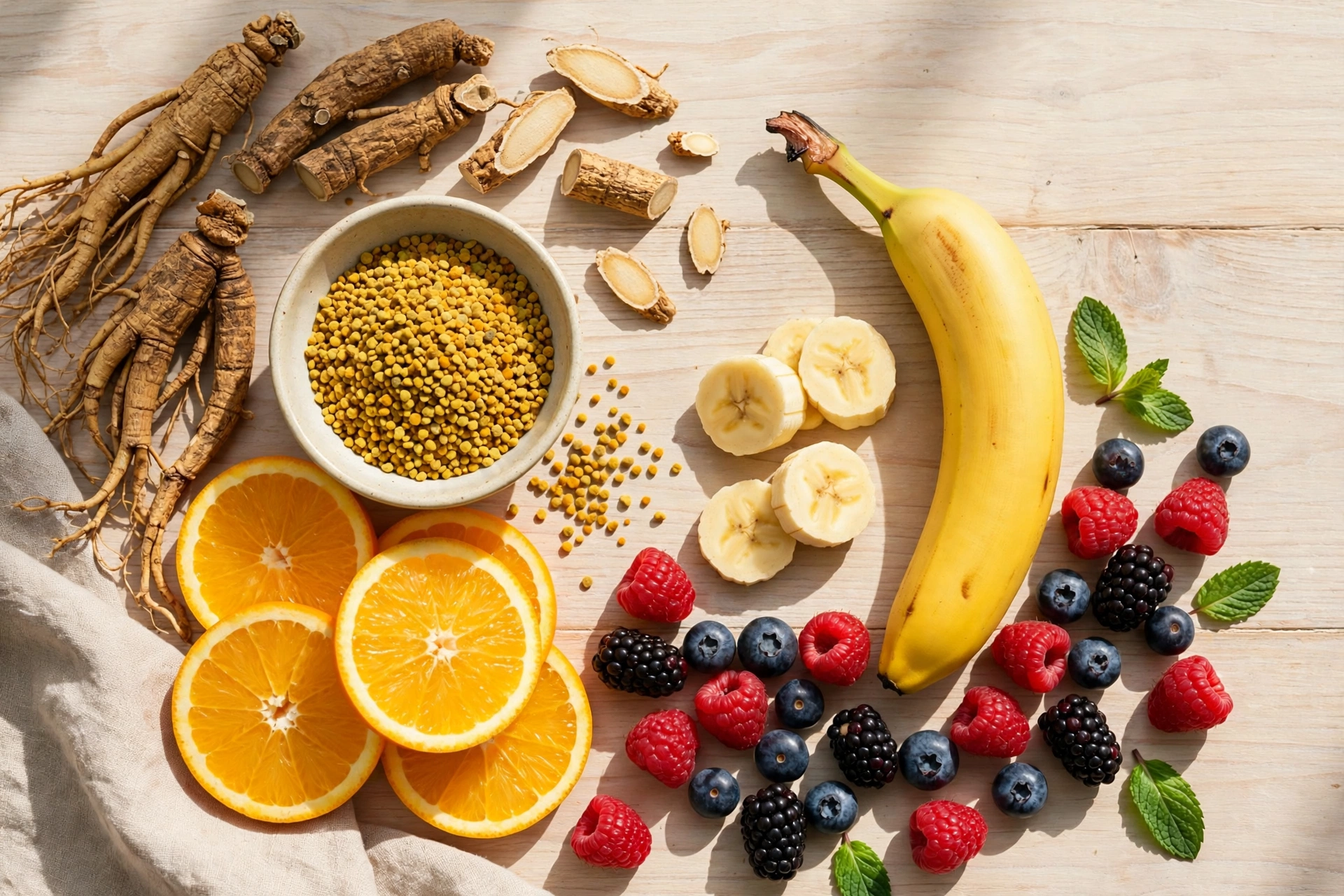
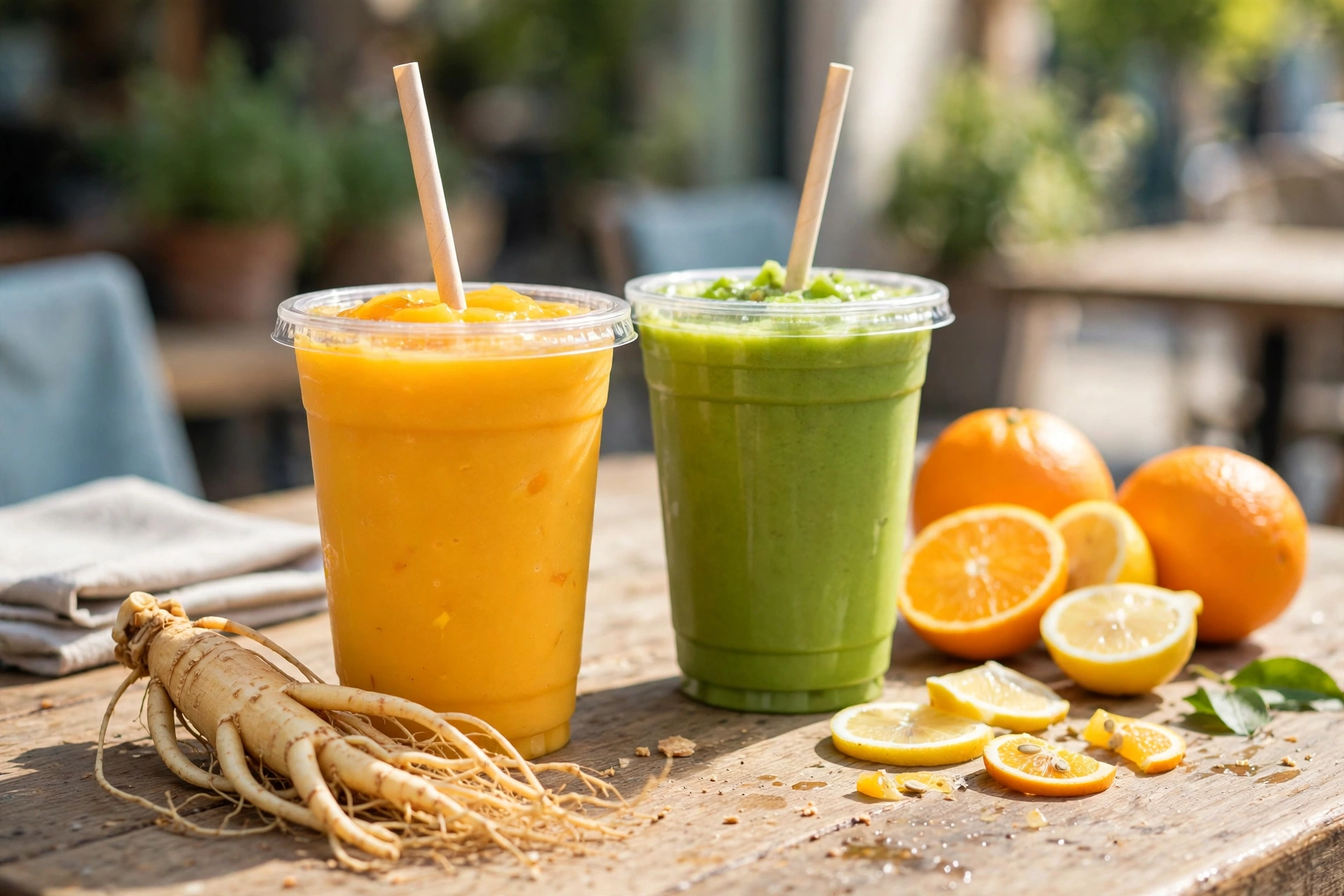
- Korean ginseng — a root traditionally used for stamina and focus.
- Bee pollen — tiny golden granules collected by bees, used as a natural nutrient top-up.
What does it actually do?
In plain terms: it adds a gentle lift to your smoothie without caffeine. It is not an energy drink and it will not replace sleep or a meal — think of it as a small push, not a jolt. People who train or work long hours are the ones who reach for it most. If you want the herbal cold-season blend instead, see our Warrior Booster guide.
Energy Booster price — the honest note
No fixed price found. The menu page does not list a fixed price for this add-on, and booster prices can vary by store. Treat it as a small extra charge on top of your smoothie and confirm the price in-store before ordering — this guide does not guess a number.
Energy vs the other boosters
Quick comparison: the Warrior Booster is the herbal cold-season blend (echinacea, goldenseal, rosehip); the Combo Booster is a general vitamins-and-minerals all-rounder; the Protein Booster is a soy-based vegetarian protein powder for meal-replacement or post-workout drinks. Energy is the one for a natural lift.
Allergy warning — read this first
Bee allergy? Skip this one. Because it contains bee pollen, anyone with a bee allergy should not order the Energy Booster. More generally, if you take regular medication or have allergies to herbal products, ask a pharmacist or doctor first. For the wider nutrition picture, see our calories and nutrition guide.
FAQs
What is the Energy Booster at Booster Juice? — A smoothie add-on made with Korean ginseng and bee pollen, meant to give a natural energy lift without caffeine.
Does the Energy Booster contain caffeine? — It is described as a lift without relying on caffeine; it is not an energy drink.
How much does the Energy Booster cost? — No fixed price was found on the menu page; it is a small extra charge that varies by store, so confirm in-store.
Can I get the Energy Booster if I have a bee allergy? — No — it contains bee pollen, so skip it if you have a bee allergy.
Energy Booster vs Warrior Booster — which should I pick? — Energy is for a natural lift (ginseng + bee pollen); Warrior is the herbal cold-season blend (echinacea, goldenseal, rosehip).
How Much Ginseng and Bee Pollen Are You Actually Getting?
Booster Juice does not publish the grams of Korean ginseng or bee pollen in one Energy Booster serving, so no honest guide can give you a number — and this one will not invent one. What matters more than the grams is the second ingredient, because bee pollen is the reason this booster has a safety warning at all: it is a bee product, and people with bee or pollen allergies can react to it. That is not a rare footnote — it is the first thing to check before you order Energy, every single time. If you have any bee allergy, skip Energy entirely and pick a different booster; the ginseng lift is not worth an allergic reaction. If the amount matters to you for another reason, ask the staff in-store whether they can share the per-serving figure, and judge the booster by how you feel over a week of use, not by a number on a page.
When to Order It — and When Not To
Energy is a daytime booster, and timing is most of how you should use it. The best moments are the morning, the early afternoon, and before a workout — the times when a gentle lift actually helps. The worst moment is the evening: ginseng is stimulating, and an Energy smoothie at 8 pm is a needless risk to your sleep. It is also not an every-drink habit. Ordering it in every smoothie, every day, dulls whatever lift it gives you and turns a useful tool into an expensive routine — most regulars use it on long days and skip it on ordinary ones. Two more cautions: it contains no caffeine, so do not compare it with coffee — the lift is gentler and shorter than a cup of coffee, and if you need caffeine, this is not where you will find it. And if you are pregnant, giving it to a child, or taking medication, ask your doctor or pharmacist first, because ginseng is a real herbal ingredient, not a flavouring.
Which Smoothies Hide It Best?
Bee pollen and ginseng have a distinct, slightly floral and earthy taste, so they hide best in strong tropical and citrus flavours and show most in delicate ones. Tropical Tornado and Mango Hurricane are the best partners — their bold fruit covers the herbal note completely. Citrus Surge is another good match, because its ginger already gives it a sharp edge. The worst matches are the vanilla-led and cream-led smoothies, where a floral, earthy note stands out against the smoothness, and the very light Mix’rs, where there is not enough flavour to hide behind. If you are trying Energy for the first time, order it in a tropical smoothie you already like — and remember the allergy rule from above before you order it at all.